 Add to Chrome
 Add to Firefox
 Add to Edge
Scaling Multi-Hop Training Data via Graph-Constrained Path Selection
May 29, 2026
Endowing large language models with compositional reasoning over specialized documents requires multi-hop training data at scale, where such data rarely exists outside of curated benchmarks built on structured sources. To construct it directly from plain, unannotated text, existing methods ask a single teacher model to jointly discover an evidence path through a document and verbalize it as a question-answer pair. However, these methods degrade sharply when documents are structured around repetitive templates and densely cross-referencing clauses, conditions that characterize most real-world specialized corpora. In this work, we decouple the two operations: reasoning paths are enumerated offline over a graph of contextual keyword centroids, and the teacher is invoked only to verbalize pre-validated paths. The graph enforces five geometric admissibility constraints, for which we provide Gram-matrix arguments establishing that local similarity bounds alone admit endpoint drift up to ${\sim}91^{\circ}$, and that an upper similarity bound is necessary to exit dense embedding cliques formed by boilerplate text. A matched-size ablation isolates the mechanism: at equal training scale, constrained and unconstrained chains yield indistinguishable downstream performance, and the gain at full scale comes from a 4.4$\times$ expansion of the usable corpus rather than from higher per-chain quality -- reframing the role of graph constraints, in this setting, as raising teacher synthesizability rather than improving chain content. Fine-tuning Qwen3-32B on 80K examples constructed from the CUAD legal contract corpus improves closed-book Token F1 from 21.66% to 38.58%. We have released our codes at https://github.com/hkgai-official/GCSCS.

MOSS: Self-Evolution through Source-Level Rewriting in Autonomous Agent Systems
May 21, 2026Autonomous agentic systems are largely static after deployment: they do not learn from user interactions, and recurring failures persist until the next human-driven update ships a fix. Self-evolving agents have emerged in response, but all confine evolution to text-mutable artifacts -- skill files, prompt configurations, memory schemas, workflow graphs -- and leave the agent harness untouched. Since routing, hook ordering, state invariants, and dispatch live in code rather than in any text artifact, an entire class of structural failure is physically unreachable from the text layer. We argue that source-level adaptation is a fundamentally more general medium: it is Turing-complete, a strict superset of every text-mutable scope, takes effect deterministically rather than through base-model compliance, and does not erode under long-context drift. We present MOSS, a system that performs self-rewriting at the source level on production agentic substrates. Each evolution is anchored to an automatically curated batch of production-failure evidence and proceeds through a deterministic multi-stage pipeline; code modification is delegated to a pluggable external coding-agent CLI while MOSS retains stage ordering and verdicts. Candidates are verified by replaying the batch against the candidate image in ephemeral trial workers, then promoted via user-consent-gated, in-place container swap with health-probe-gated rollback. On OpenClaw, MOSS lifts a four-task mean grader score from 0.25 to 0.61 in a single cycle without human intervention.
Conditional Equivalence of DPO and RLHF: Implicit Assumption, Failure Modes, and Provable Alignment
May 20, 2026Direct Preference Optimization (DPO) has emerged as a popular alternative to Reinforcement Learning from Human Feedback (RLHF), offering theoretical equivalence with simpler implementation. We prove this equivalence is conditional rather than universal, depending on an implicit assumption frequently violated in practice: the RLHF-optimal policy must prefer human-preferred responses. When this assumption fails, DPO optimizes relative advantage over the reference policy rather than absolute alignment with human preferences, leading to pathological convergence where policies decrease DPO loss while preferring dispreferred responses. We characterize when this assumption is violated, show the existence of an undesirable solution space, and prove that DPO and RLHF optimize fundamentally different objectives in such cases. To address this, we introduce Constrained Preference Optimization (CPO), augmenting RLHF with constraints for provable alignment. We further provide a geometric interpretation through soft margin ranking, revealing that DPO implements margin ranking with potentially negative targets. Our theoretical analysis establishes when DPOs' guarantees hold and provides solutions preserving simplicity with provable alignment. Comprehensive experiments on standard benchmarks demonstrate that CPO achieves state-of-the-art performance. Code is available at: https://github.com/visitworld123/CPO.
ClawNet: Human-Symbiotic Agent Network for Cross-User Autonomous Cooperation
Apr 21, 2026Current AI agent frameworks have made remarkable progress in automating individual tasks, yet all existing systems serve a single user. Human productivity rests on the social and organizational relationships through which people coordinate, negotiate, and delegate. When agents move beyond performing tasks for one person to representing that person in collaboration with others, the infrastructure for cross-user agent collaboration is entirely absent, let alone the governance mechanisms needed to secure it. We argue that the next frontier for AI agents lies not in stronger individual capability, but in the digitization of human collaborative relationships. To this end, we propose a human-symbiotic agent paradigm. Each user owns a permanently bound agent system that collaborates on the owner's behalf, forming a network whose nodes are humans rather than agents. This paradigm rests on three governance primitives. A layered identity architecture separates a Manager Agent from multiple context-specific Identity Agents; the Manager Agent holds global knowledge but is architecturally isolated from external communication. Scoped authorization enforces per-identity access control and escalates boundary violations to the owner. Action-level accountability logs every operation against its owner's identity and authorization, ensuring full auditability. We instantiate this paradigm in ClawNet, an identity-governed agent collaboration framework that enforces identity binding and authorization verification through a central orchestrator, enabling multiple users to collaborate securely through their respective agents.
FedRG: Unleashing the Representation Geometry for Federated Learning with Noisy Clients
Mar 20, 2026Federated learning (FL) suffers from performance degradation due to the inevitable presence of noisy annotations in distributed scenarios. Existing approaches have advanced in distinguishing noisy samples from the dataset for label correction by leveraging loss values. However, noisy samples recognition relying on scalar loss lacks reliability for FL under heterogeneous scenarios. In this paper, we rethink this paradigm from a representation perspective and propose \method~(\textbf{Fed}erated under \textbf{R}epresentation \textbf{G}emometry), which follows \textbf{the principle of ``representation geometry priority''} to recognize noisy labels. Firstly, \method~creates label-agnostic spherical representations by using self-supervision. It then iteratively fits a spherical von Mises-Fisher (vMF) mixture model to this geometry using previously identified clean samples to capture semantic clusters. This geometric evidence is integrated with a semantic-label soft mapping mechanism to derive a distribution divergence between the label-free and annotated label-conditioned feature space, which robustly identifies noisy samples and updates the vMF mixture model with the newly separated clean dataset. Lastly, we employ an additional personalized noise absorption matrix on noisy labels to achieve robust optimization. Extensive experimental results demonstrate that \method~significantly outperforms state-of-the-art methods for FL with data heterogeneity under diverse noisy clients scenarios.
From Scalar Rewards to Potential Trends: Shaping Potential Landscapes for Model-Based Reinforcement Learning
Feb 03, 2026Model-based reinforcement learning (MBRL) achieves high sample efficiency by simulating future trajectories with learned dynamics and reward models. However, its effectiveness is severely compromised in sparse reward settings. The core limitation lies in the standard paradigm of regressing ground-truth scalar rewards: in sparse environments, this yields a flat, gradient-free landscape that fails to provide directional guidance for planning. To address this challenge, we propose Shaping Landscapes with Optimistic Potential Estimates (SLOPE), a novel framework that shifts reward modeling from predicting scalars to constructing informative potential landscapes. SLOPE employs optimistic distributional regression to estimate high-confidence upper bounds, which amplifies rare success signals and ensures sufficient exploration gradients. Evaluations on 30+ tasks across 5 benchmarks demonstrate that SLOPE consistently outperforms leading baselines in fully sparse, semi-sparse, and dense rewards.
IFFair: Influence Function-driven Sample Reweighting for Fair Classification
Dec 08, 2025
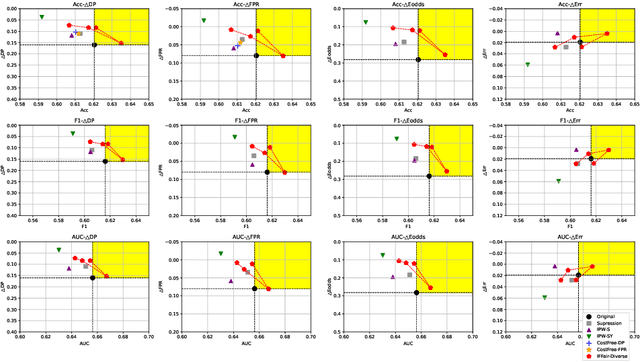
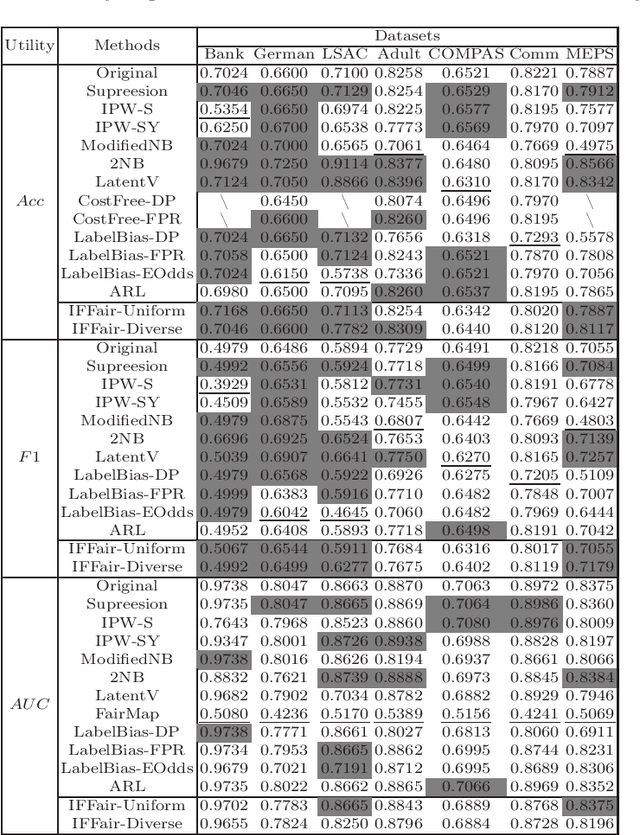
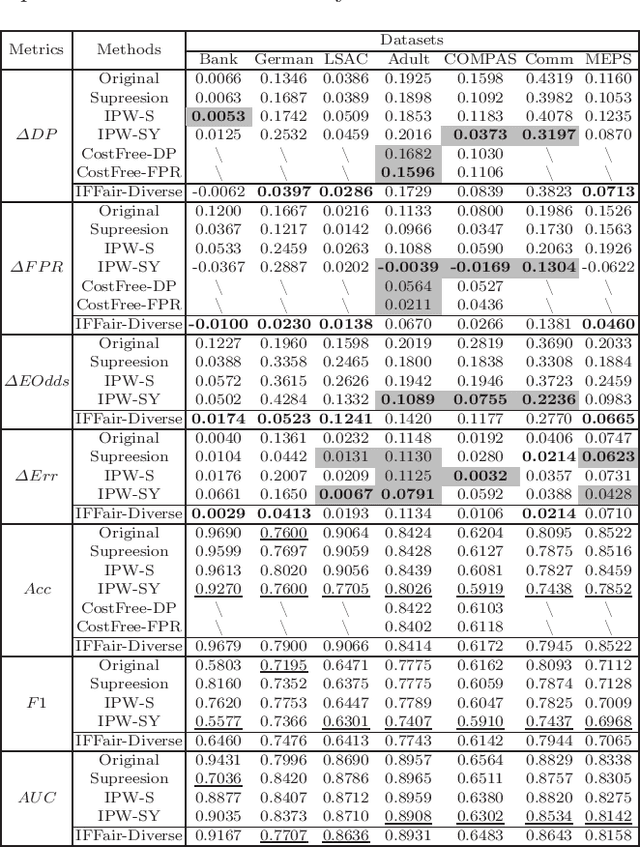
Because machine learning has significantly improved efficiency and convenience in the society, it's increasingly used to assist or replace human decision-making. However, the data-based pattern makes related algorithms learn and even exacerbate potential bias in samples, resulting in discriminatory decisions against certain unprivileged groups, depriving them of the rights to equal treatment, thus damaging the social well-being and hindering the development of related applications. Therefore, we propose a pre-processing method IFFair based on the influence function. Compared with other fairness optimization approaches, IFFair only uses the influence disparity of training samples on different groups as a guidance to dynamically adjust the sample weights during training without modifying the network structure, data features and decision boundaries. To evaluate the validity of IFFair, we conduct experiments on multiple real-world datasets and metrics. The experimental results show that our approach mitigates bias of multiple accepted metrics in the classification setting, including demographic parity, equalized odds, equality of opportunity and error rate parity without conflicts. It also demonstrates that IFFair achieves better trade-off between multiple utility and fairness metrics compared with previous pre-processing methods.
Enhancing Target-unspecific Tasks through a Features Matrix
May 07, 2025Recent developments in prompt learning of large vision-language models have significantly improved performance in target-specific tasks. However, these prompt optimizing methods often struggle to tackle the target-unspecific or generalizable tasks effectively. It may be attributed to the fact that overfitting training causes the model to forget its general knowledge having strong promotion on target-unspecific tasks. To alleviate this issue, we propose a novel Features Matrix (FM) regularization approach designed to enhance these models on target-unspecific tasks. Our method extracts and leverages general knowledge, shaping a Features Matrix (FM). Specifically, the FM captures the semantics of diverse inputs from a deep and fine perspective, preserving essential general knowledge, which mitigates the risk of overfitting. Representative evaluations demonstrate that: 1) the FM is compatible with existing frameworks as a generic and flexible module, and 2) the FM significantly showcases its effectiveness in enhancing target-unspecific tasks, achieving state-of-the-art performance.
* ICML 2025
Leveraging Submodule Linearity Enhances Task Arithmetic Performance in LLMs
Apr 15, 2025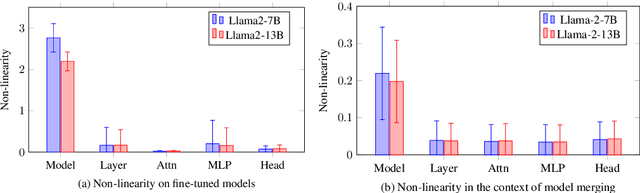
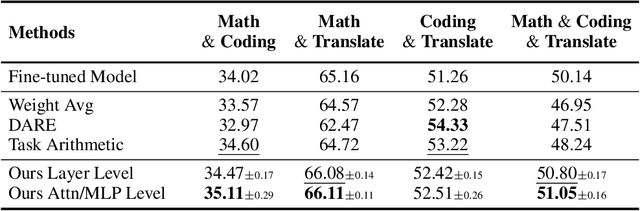
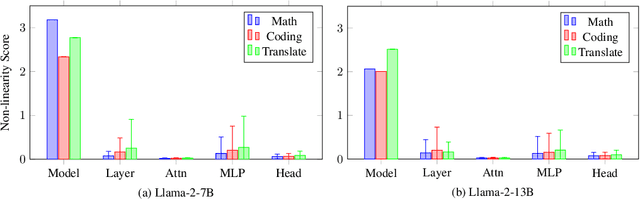
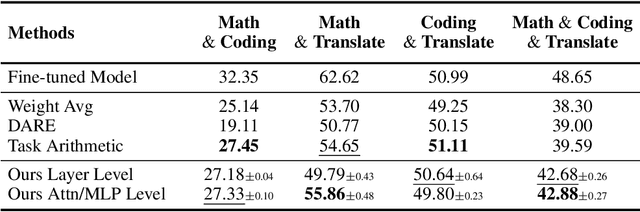
Task arithmetic is a straightforward yet highly effective strategy for model merging, enabling the resultant model to exhibit multi-task capabilities. Recent research indicates that models demonstrating linearity enhance the performance of task arithmetic. In contrast to existing methods that rely on the global linearization of the model, we argue that this linearity already exists within the model's submodules. In particular, we present a statistical analysis and show that submodules (e.g., layers, self-attentions, and MLPs) exhibit significantly higher linearity than the overall model. Based on these findings, we propose an innovative model merging strategy that independently merges these submodules. Especially, we derive a closed-form solution for optimal merging weights grounded in the linear properties of these submodules. Experimental results demonstrate that our method consistently outperforms the standard task arithmetic approach and other established baselines across different model scales and various tasks. This result highlights the benefits of leveraging the linearity of submodules and provides a new perspective for exploring solutions for effective and practical multi-task model merging.
Generalizable Prompt Learning of CLIP: A Brief Overview
Mar 03, 2025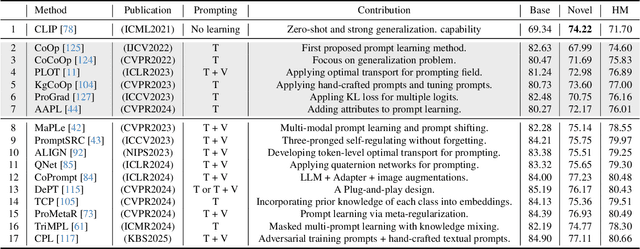
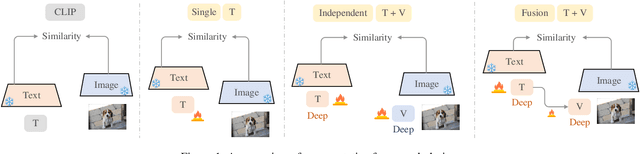

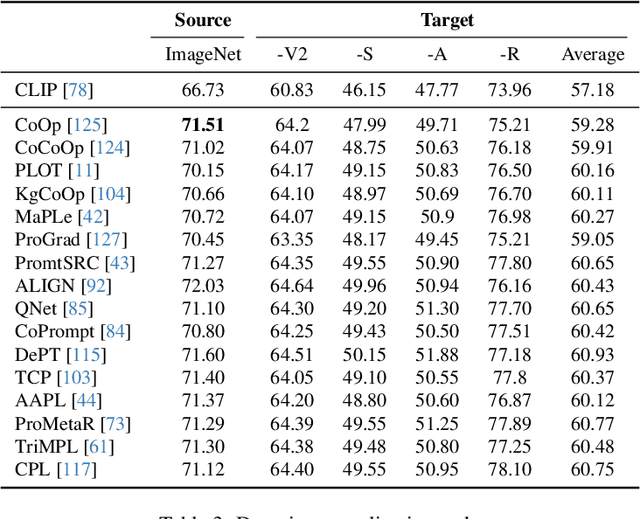
Existing vision-language models (VLMs) such as CLIP have showcased an impressive capability to generalize well across various downstream tasks. These models leverage the synergy between visual and textual information, enabling them to understand and reason about the content present in images and text in a unified manner. This article provides a brief overview of CLIP based on few-shot prompt learning, including experimental data and technical characteristics of some methods. The purpose of this review is to provide a reference for researchers who have just started their research in generalizable prompting of CLIP through few-shot training for classification across 15 datasets and also to facilitate the integration of this field by researchers in other downstream tasks.